

Axel Watts on Grace, Land and Practice
Axel Watts has taught yoga in spaces that range from public stages to intimate rooms, from city studios to land-based retreat settings. He’s a much-loved (formerly) SF-based yoga teacher; now the owner of a retreat center, The Tilted Hill.
As a presenter at the 2026 Bend Yoga Festival, a multi-day yoga festival in Bend, Oregon, Axel brings a practice shaped by queer visibility, traditional yoga lineages, and a deep relationship with land and place.
In this conversation with BYF, he reflects on grace, integrity, and what it means to practice in community—in ways both visible and internal.
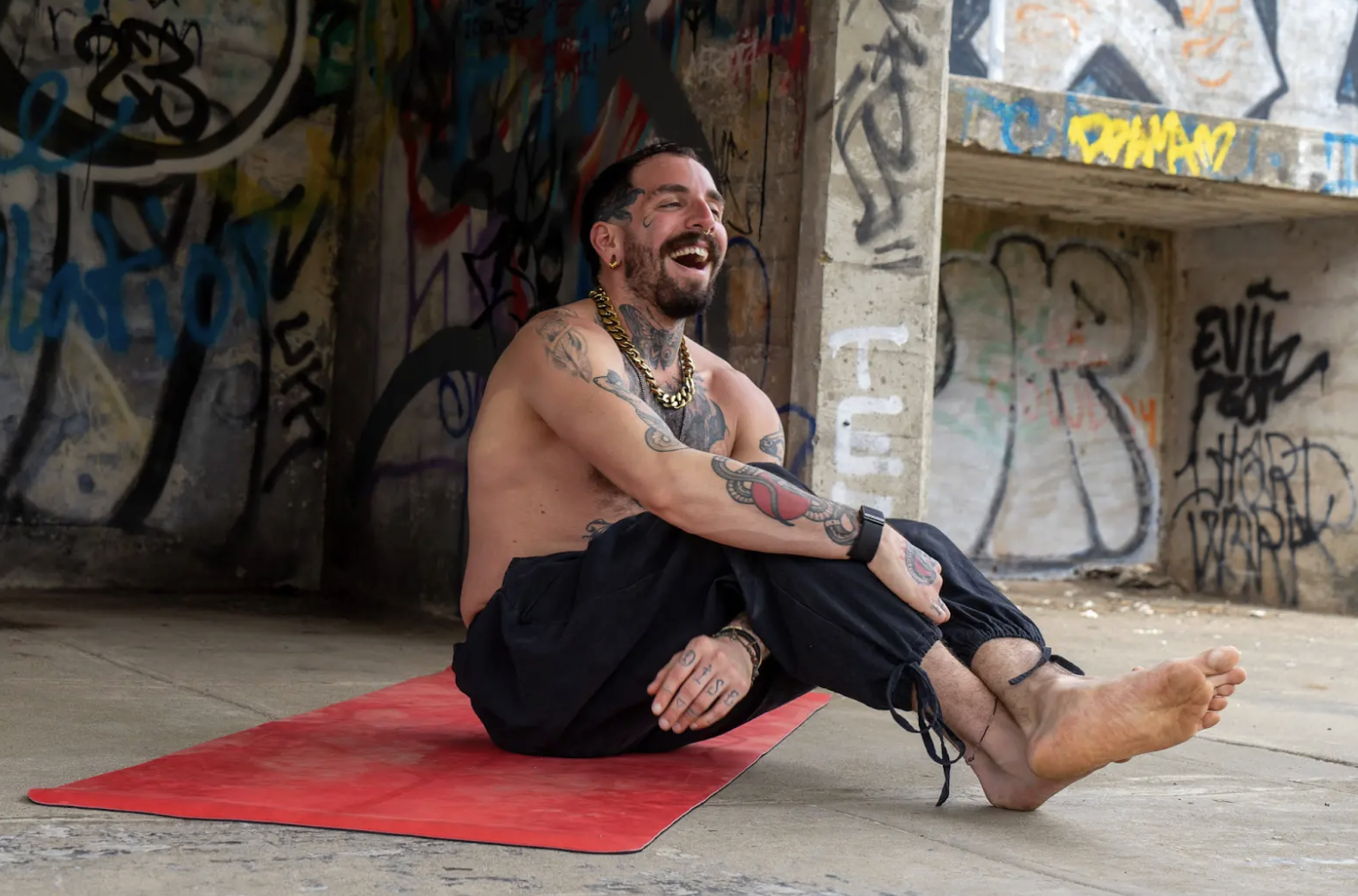
Grace Across Spaces
Angela (BYF): You’ve taught yoga in some very different environments—from SF Pride to studio rooms like HAUM to now your own retreat center, The Tilted Hill, in the Sierra Nevada. How do those spaces change the way you teach, and what do they all surprisingly have in common?
Axel: I love this question. It feels really good to reflect on all the spaces I’ve had the privilege to teach in and the containers I’ve had the joy of cultivating.
Teaching at SF Pride was such a huge moment for me. It gave me a platform to be the leader I was looking for as a queer kid growing up in a small town. HAUM was where I not only found myself as a yoga instructor, but where I came home to Axel. And The Tilted Hill is giving me space to slow down and reconnect to the simplicity of the practice and the rhythms of the seasons.
What all of these spaces have in common is grace—grace to show up as I am. To show up for myself, for the land, for the community, and for the practice.
Visibility, Safety, and Queer Leadership
BYF: What did teaching at SF Pride teach you—not just as a yoga teacher, but as a human—about community, safety, and visibility?
Axel: I taught my first yoga class at the SF LGBT Center. Fast forward to teaching on the main stage at SF Pride, and it was surreal.
Stages and audiences aside, that moment taught me what it means to be a queer leader. I grew up in a small, conservative town in southwest Michigan, never really seeing anyone else like me. Teaching at Pride reminded me that when we step out of the closet and into our light, our lives can become a lighthouse for others.
“For me, teaching is about community—creating spaces where students can let the armor fall away, even if just for an hour. No code switching. No scanning the room to see if it’s safe. A place where queer people can simply be in their bodies, held and nurtured in true community.”
Finding Home Through Practice
BYF: What originally pulled you toward creating your own retreat center instead of continuing solely in studios or festivals? What need were you trying to answer?
Axel: My practice found me when I needed it most. My dad had just been diagnosed with stage four cancer, I had moved to San Francisco, and everything in my life was changing. I was under so much stress that my hair started falling out.
The practice asked me to slow down—to witness what was happening around me, not to me.
After a few years in San Francisco, I began spending time in the Sierra Nevada foothills after meeting my partner. This land gave me space. Space to slow down. Space to peel back to what is. Space to come back to myself again and again.
I knew there was magic here. A pull toward open skies, massive trees, and stoic boulders. It reminded me of home. And home was what I needed.
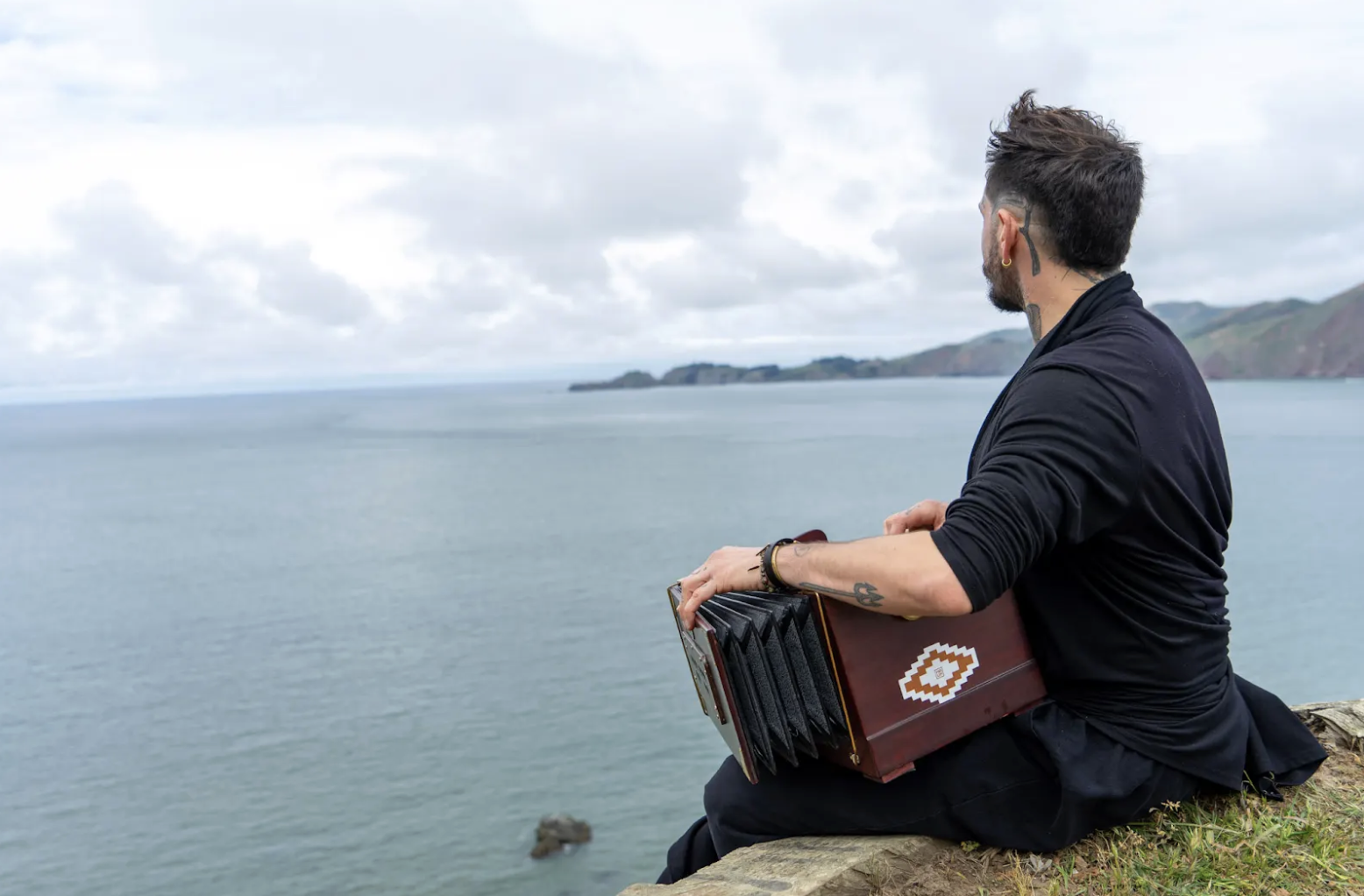
On Lineage, Integrity, and Letting the Land Lead
BYF: How does the land itself shape the retreats you offer? In what ways is nature an active teacher in your work now?
Axel: Retreats at The Tilted Hill are simple. Nothing luxurious. Nothing flashy. Just the divine landscape of the foothills.
They’re focused around the natural rhythms of nature—permission to pause, space to disconnect from the hustle and reconnect to the land. Maybe even a moment or two of boredom. I know it’s a strange thing to say, but I’ve really cherished being bored in the woods after years of being overstimulated in the city.
BYF: Your path blends queer visibility, traditional yoga lineages, and land-based retreat culture. How do you hold all of those threads without letting one dominate the others?
Axel: Each thread asks something different of me. Queer visibility asks for honesty and refusal to shrink. Traditional lineage asks for humility, discipline, and a willingness to be shaped by something older than my preferences. Land-based work asks for slowness, listening, and reciprocity rather than performance.
When one begins to dominate, the others naturally push back.
What holds it all together is integrity of context. I’m not trying to prove these threads are compatible. I’m practicing them side by side and letting the friction teach me.
“On the mat, lineage shows up through structure, sequencing, breath, and ethics. In community, queerness shows up through who feels safe, seen, and unexceptional. On the land, neither identity nor lineage is centered. The land sets the terms.”
What We Carry Forward
BYF: Is there a moment in your teaching life that quietly changed everything for you?
Axel: A student came to class for the first time. That night, I taught about leaning into uncertainty—about holding success and failure in the same hand, about the quiet courage of saying yes.
Mid-flow, I caught a moment of him smiling, even in the hard shapes. I watched the whole room wobble, laugh, lose balance, and come back together without judgment. One of those classes that just lands.
After class, he hugged me—one of those full, honest hugs—and with tears in his eyes said, “You are doing what you are called to do.”
I needed that reminder. That our students teach us just as much as we teach them. That yoga isn’t about perfection or performance, but about showing up, wobbling together, and choosing to stay open.
Axel Watts will be presenting at the 2026 Bend Yoga Festival in Bend, Oregon, where yoga, meditation, and immersive outdoor experiences like forest bathing and hiking come together in community-centered practice.